The landscape of teacher professional development has long been characterised by sporadic workshops and generalised seminars. However, the advent of artificial intelligence offers unprecedented opportunities for personalised, continuous professional growth. Aristotal, an AI-driven teacher coaching system, exemplifies this potential by leveraging recorded classroom sessions to facilitate targeted, evidence-based coaching dialogues and implementing a data-driven approach to tracking professional development progress.
Advisory Board
Our advisory board includes globally recognised experts in education who bring deep expertise in formative assessment, teacher coaching, and educational leadership to guide the development and scaling of the platform.



Theoretical Framework
Aristotal's development is grounded in a synthesis of established educational and cognitive theories, each contributing to its multifaceted approach to teacher coaching.
At the core of Aristotal's methodology lies Dan Willingham's (2009) research on memory and learning. Willingham's assertion that "memory is the residue of thought" underpins Aristotal's focus on deep analysis of teaching practices. Aristotal facilitates the kind of cognitive processing that Willingham posits as crucial for long-term learning and skill development by encouraging educators to engage in substantive reflection on their recorded lessons and to reflect on their existing practice.
Jim Knight's (2007) teacher coaching research, which emphasises equality, choice, voice, dialogue, reflection, praxis, and reciprocity, informs Aristotal's interactive style. Aristotal's analysis of recorded lessons serves as a springboard for collaborative dialogue, embodying Knight's principles of partnership in the coaching relationship.
Arthur Costa and Robert Garmston's (2002) cognitive coaching model, focusing on teachers' cognitive processes in planning, reflecting, and problem-solving, is evident in Aristotal's approach. Aristotal guides teachers through metacognitive exercises based on their recorded lessons, fostering the kind of reflective practice that Costa and Garmston argue is essential for professional growth.
John Whitmore's (2002) GROW (Goal, Reality, Options, Will) model provides a structural framework for Aristotal's coaching sessions. By analysing recorded lessons, Aristotal can help teachers set clear objectives (Goal), assess their current practices (Reality), explore alternative strategies (Options), and commit to action (Will).
Dylan Wiliam's (2011) work on formative assessment informs Aristotal's emphasis on ongoing evaluation and improvement. Aristotal encourages teachers to continually gather evidence of their impact through lesson recordings, using this data to inform their professional development in a cycle of continuous improvement.
Methodology
Aristotal's operational framework centres on the analysis of recorded classroom sessions and a systematic approach to goal-setting and progress tracking.
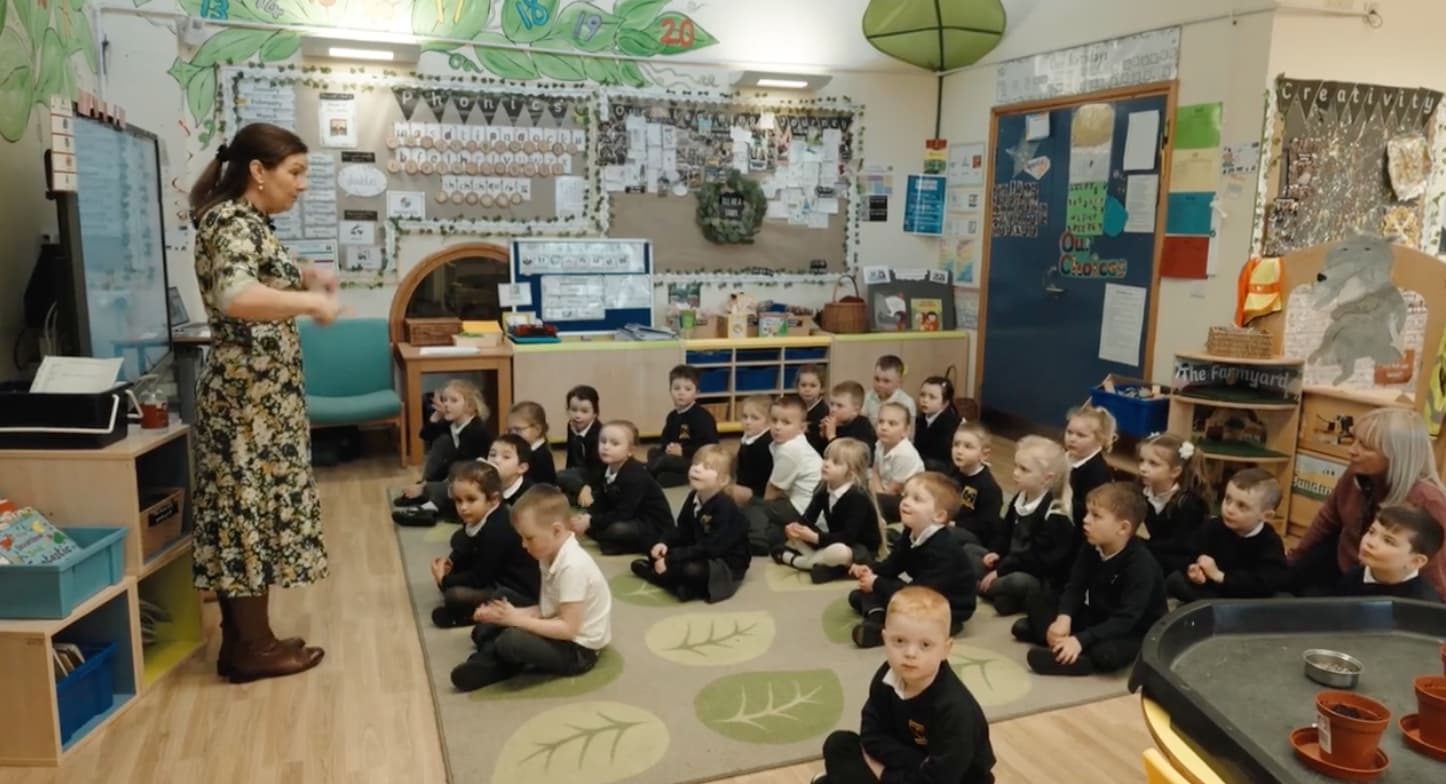
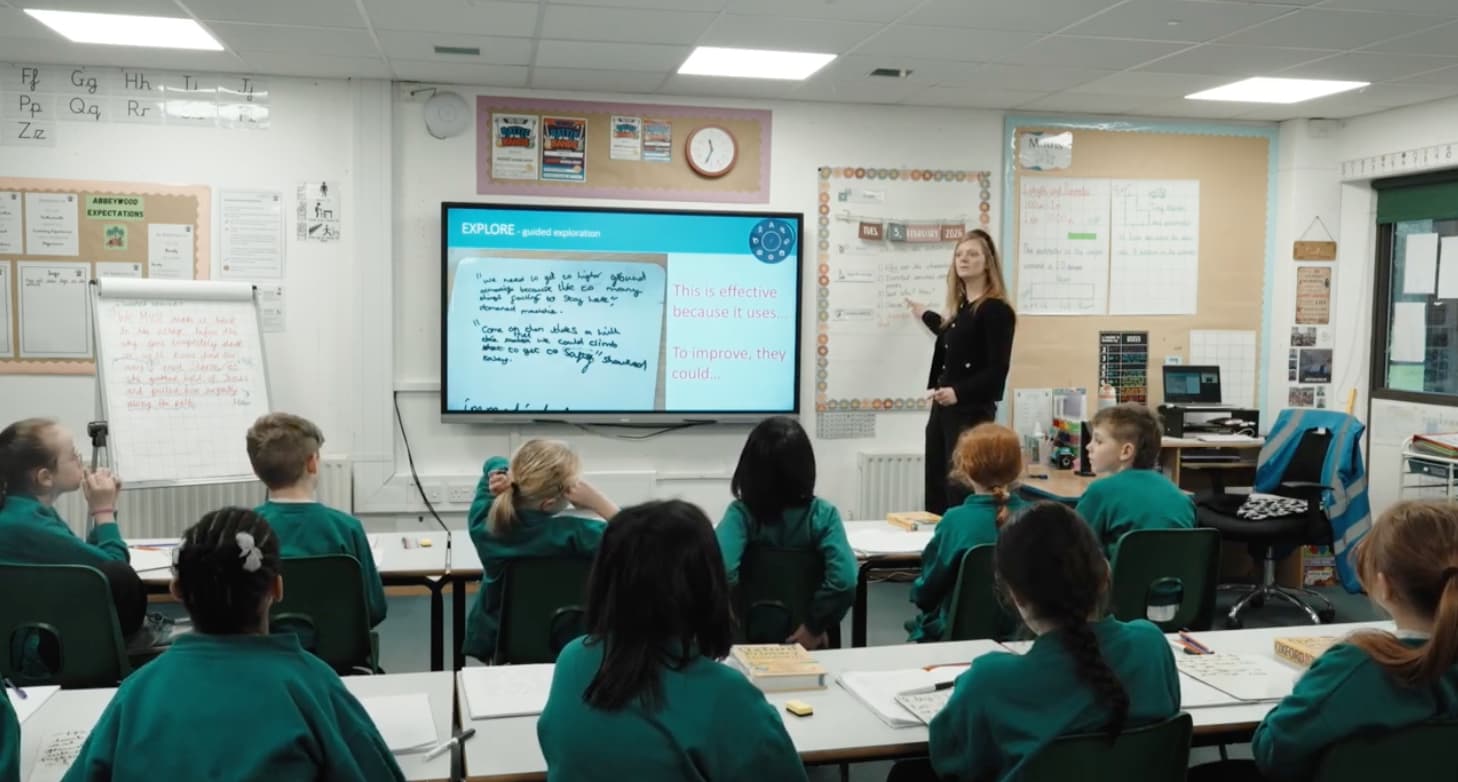
Recorded lessons provide an objective record of classroom interactions, serving as a factual basis for coaching dialogues.
Over time, a collection of recorded lessons allows for tracking of teacher progress, skills developed, and identification of challenges that have been overcome.
By observing actual classroom dynamics and through an ongoing dialogue with the teacher, Aristotal can offer coaching tailored to the specific context of each educator.
The recordings serve as concrete evidence, allowing for more focused and productive coaching conversations.
The process of reviewing and discussing recorded lessons fosters deep reflection, surfacing observations and connections that might be seemingly disparate to a busy teacher, aligning with best practice in professional development.
At the conclusion of each coaching dialogue, Aristotal facilitates the setting of specific, measurable goals for the teacher's professional development.
The system tracks progress against set goals over multiple coaching sessions, building an objective, data-driven evidence base of the teacher's professional growth.
By using consistent metrics across coaching sessions and teachers, Aristotal enables standardised evaluation of professional development progress.
Evidence-Based Professional Development
The integration of AI technology with established coaching methodologies in Aristotal represents a significant advancement in teacher professional development. By basing its coaching dialogue on recorded lessons and implementing a data-driven approach to goal-setting and progress tracking, Aristotal offers a level of personalisation, evidence-based feedback, and objective assessment that traditional professional development struggles to achieve.
The system's ability to build a comprehensive, data-driven picture of a teacher's progress over time addresses a significant gap in current CPD practices. As noted by Darling-Hammond et al. (2017), effective professional development should be sustained over time and incorporate active learning strategies. Aristotal's approach aligns with these principles by facilitating ongoing, targeted development based on concrete classroom evidence and measurable goals.
Moreover, the standardised, data-driven nature of Aristotal's progress tracking offers unprecedented benefits for educational stakeholders at various levels.
The system provides objective evidence of skill development and professional growth, which can be valuable for career advancement and self-assessment.
School leaders gain insights into the effectiveness of their professional development initiatives and can make data-informed decisions about resource allocation and teacher support.
Multi-Academy Trusts (MATs), local authorities, or school districts can use aggregated data to identify trends, best practices, and areas needing systemic improvement.
This approach to CPD evaluation aligns with calls in the literature for more rigorous assessment of professional development outcomes. Kennedy (2016) argues for the need to evaluate CPD not just in terms of teacher satisfaction, but in terms of changes in teacher practice and student outcomes. Aristotal's data-driven approach provides a mechanism for such in-depth evaluation.
Conclusion
Aristotal's innovative approach to teacher coaching, grounded in established educational theories and leveraging AI analysis of recorded lessons, offers a promising direction for the future of teacher professional development. Its integration of data-driven goal-setting and progress tracking represents a significant advancement in the field, providing a level of objectivity and standardisation previously unattainable in CPD evaluation.
Aristotal's approach to CPD, combining AI-driven analysis with objective, data-informed progress tracking, represents a world-first in the field of teacher professional development. As education systems worldwide grapple with the need for more effective and efficient approaches to teacher growth, Aristotal offers a future where personalised, evidence-based, and continuously adaptable professional development becomes the norm rather than the exception.